The Cuckoo's Egg
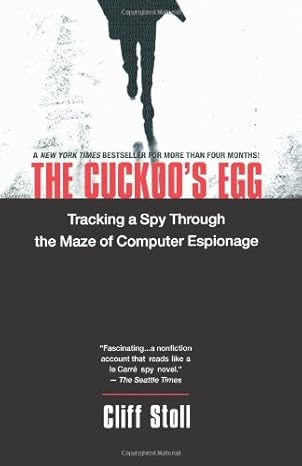
This is the grandfather of the genre. An astronomer-turned-sysadmin notices a 75-cent accounting error in a university computer and ends up tracking a KGB-sponsored hacker across international networks. What begins as a minor audit transforms into a year-long digital manhunt involving the FBI, CIA, and German intelligence. Stoll’s meticulous documentation of packet tracing, social engineering countermeasures, and low-tech surveillance (like hiding under desks with thermoses of coffee) reads like a cyber-noir thriller—yet every detail is rigorously factual. More than a technical case study, it’s a timeless lesson in curiosity, persistence, and the human element of security. Decades later, its core message remains urgent: in digital defense, vigilance starts with noticing the anomaly others ignore.
Stoll’s narrative voice is both endearing and authoritative. As a Berkeley astronomer thrust into the world of computer security, he brings a scientist’s methodical approach to what was then an uncharted field. His descriptions of 1980s UNIX systems, modem handshakes, and network routing protocols are surprisingly accessible, even to readers without technical backgrounds. The book’s pacing mirrors the investigation itself—slow, painstaking work punctuated by moments of breakthrough. When Stoll finally identifies the hacker as a West German working for Soviet intelligence, the payoff feels earned through hundreds of pages of dogged detective work.
What makes “The Cuckoo’s Egg” endure isn’t just its historical significance as one of the first documented cases of state-sponsored cyber espionage. It’s Stoll’s unwavering commitment to following the evidence wherever it leads, even when that means challenging bureaucratic inertia at the highest levels of U.S. law enforcement. His frustration with agencies that dismiss a 75-cent discrepancy as insignificant resonates deeply in an era where data breaches costing millions often begin with similarly small oversights. This book should be required reading for every security professional, not for its technical details (which are inevitably dated), but for its masterclass in the mindset required to protect digital systems.