The Code Book
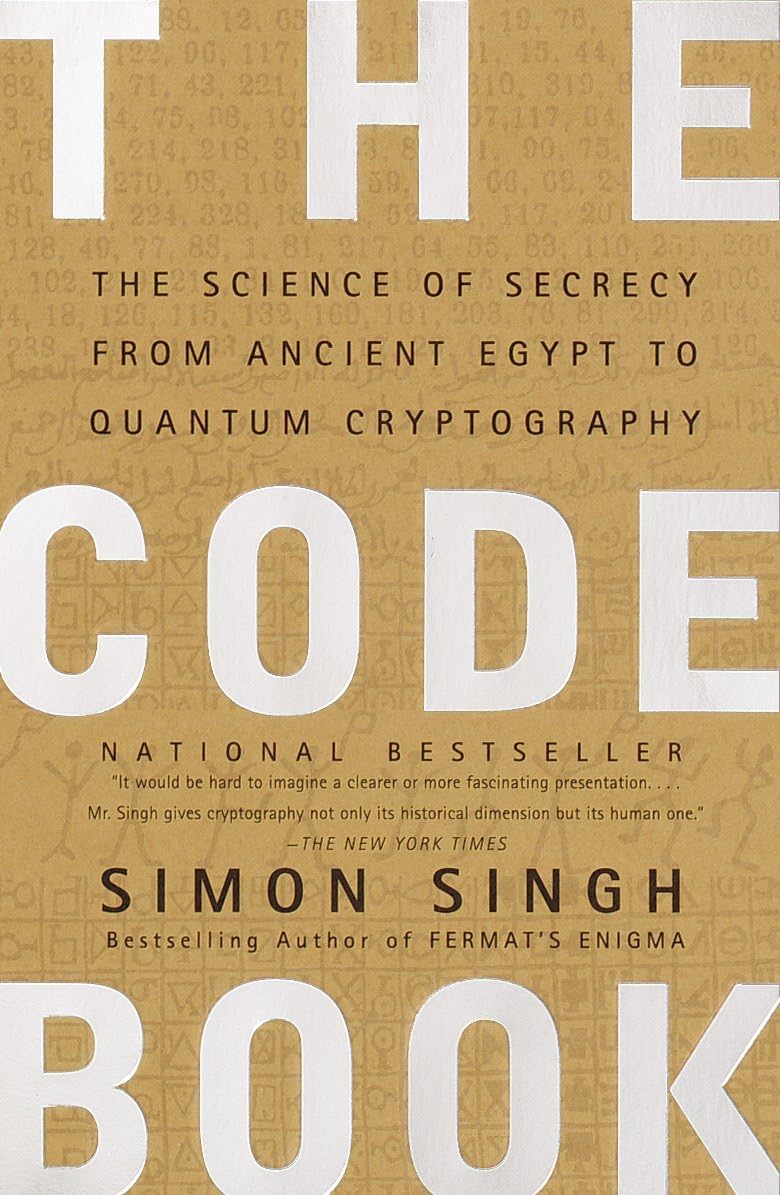
Before RSA, AES, or blockchain, there was Mary Queen of Scots’ ciphered letters—and Simon Singh traces every pivotal moment between. The Code Book masterfully bridges abstract mathematics and human drama: the Polish mathematicians who first cracked Enigma in a forest cabin, the Navajo Code Talkers whose unbreakable language turned WWII tides, and the teenage cryptographers who invented public-key cryptography in a Berkeley dorm room. This isn’t dry technical history; it’s a thriller where national survival hinges on whether a message stays secret.
Singh excels at making complex concepts accessible without oversimplifying. His explanation of quantum key distribution—using photon polarization to detect eavesdroppers—reads like scientific poetry. But the book’s enduring value lies in its ethical framing: cryptography isn’t inherently good or evil. The same RSA algorithm securing your banking app also protects Silk Road transactions. Singh forces us to confront uncomfortable questions: Should law enforcement have backdoors? When does privacy become dangerous? His balanced exploration of the Crypto Wars (1990s debates over export controls) feels urgently relevant as governments today demand “responsible encryption.”
For practitioners, this is required context. Understanding how frequency analysis broke Caesar ciphers helps you appreciate why modern protocols avoid deterministic encryption. Knowing how Zimmermann’s PGP sparked a constitutional crisis explains today’s regulatory battles. The Code Book doesn’t teach you to write crypto—it teaches you to think like a cryptographer: paranoid, meticulous, and deeply respectful of the human stories behind every algorithm. Pair this with Cryptonomicon for the perfect theory/practice duo.