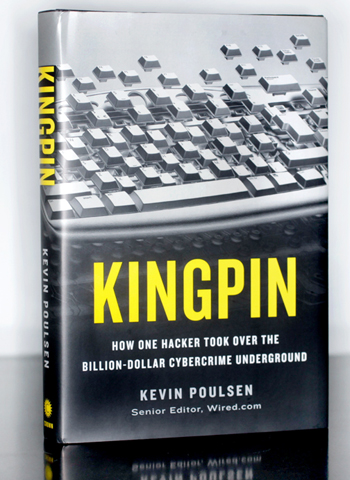
Kingpin: How One Hacker Took Over the Billion-Dollar Cybercrime Underground
A Masterclass in Cybercrime Storytelling
Kevin Poulsen, himself a reformed hacker turned investigative journalist, delivers a meticulously researched account of how a single security researcher and hacker orchestrated one of the most audacious takeovers in cybercrime history. With unparalleled access to law enforcement files and deep technical understanding, Poulsen reconstructs a shadowy underworld where digital identities are fluid and fortunes are built on stolen data.
The Anatomy of a Digital Heist
The narrative centers on a brilliant but conflicted security researcher who operated simultaneously in two worlds: as a respected white-hat consultant advising law enforcement on cyber threats, and as a black-hat operator running sophisticated carding forums that became the epicenter of global credit card fraud. This duality forms the spine of Poulsen’s investigation—how someone with legitimate security expertise chose to weaponize that knowledge against the very systems he once helped protect.
What begins as a story of technical prowess evolves into a Shakespearean tragedy of hubris. The protagonist’s hostile takeover of rival carding forums—executed through SQL injection attacks, social engineering, and strategic manipulation—consolidated unprecedented control over the cybercrime ecosystem. Yet this very consolidation created vulnerabilities: centralized power attracted law enforcement attention, and the operator’s growing arrogance blinded him to the undercover investigation closing in.
Why This Book Matters
Kingpin transcends typical true-crime fare through three distinctive qualities:
Technical Authenticity: Poulsen explains complex attacks—browser exploits, man-in-the-middle interceptions, database compromises—with precision yet accessibility. Readers understand not just what happened, but how it worked technically, without drowning in jargon.
Cultural Archaeology: The book preserves a pivotal moment when hacking evolved from ideological exploration to industrialized crime. Poulsen documents the economics of carding forums with anthropological care: pricing structures for stolen cards, verification rituals, and the strange honor codes governing criminals who would betray each other in an instant.
Psychological Depth: Rather than caricaturing hackers as cartoon villains, Poulsen explores the psychology driving technically gifted individuals toward crime—the intoxication of outsmarting systems, the allure of operating beyond legal boundaries, and the self-destructive patterns that ultimately enable capture.
What Makes It Exceptional
Technical Accuracy: Unlike most cybercrime books, Poulsen gets the technical details right. His descriptions of SQL injection attacks, browser exploits, and phishing campaigns are both accurate and accessible.
Character Depth: Emerges as a complex, conflicted figure—brilliant yet self-destructive, idealistic yet criminal. The book explores what drives someone with extraordinary talent to choose crime over legitimate success.
Law Enforcement Perspective: With unprecedented access to FBI agents and prosecutors, Poulsen shows both sides of the cat-and-mouse game, revealing the innovative techniques investigators use to track cybercriminals.
The Investigation Unfolds
Poulsen masterfully interweaves three narrative threads: the hacker’s technical operations, the FBI’s patient undercover work (including agents posing as cybercriminals), and the volatile ecosystem of betrayal among forum members. The climax arrives not with a dramatic raid, but through digital forensics—metadata in a single image file that unraveled years of operational security. This detail epitomizes Poulsen’s thesis: in cybercrime, technical brilliance often founders on human error.
Critical Acclaim
“A milestone in the anthropology of hacking, up there with Steven Levy’s Hackers… what will make this book endure is Poulsen’s elegant elucidation of how the hacking world evolved from its pimply, ideological beginnings into a global criminal enterprise.” —The Atlantic
“True crime doesn’t get much better than this: a thrilling account… Kingpin gives us not just the personalities and double-dealing of this new underground, but also a look at how hacking has transformed the world of crime.” —Barnes & Noble
“Kevin Poulsen’s reporting is first class: the book contains fascinating details of the FBI’s investigative techniques and the scams and other hackers ran. It’s not easy to write a gripping passage about a database query language, but Poulsen pulls it off.” —New Scientist
Who Should Read This
- Cybersecurity professionals wanting to understand real-world attacks
- True crime enthusiasts looking for 21st-century stories
- Anyone curious about how credit card theft actually works
- Readers who enjoyed The Big Short or Bad Blood—tales of complex systems and the people who game them
This isn’t just a book about hacking—it’s a book about ambition, identity, and the strange parallel universe that exists just beneath the surface of the internet we all use every day.