Hackers
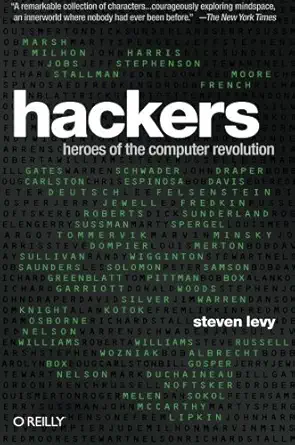
This is the definitive history of the early MIT hackers. Steven Levy’s seminal work explains the “Hacker Ethic”—the idea that information should be free—which provides the philosophical context for why people like Max Butler (from Kingpin) do what they do. Levy traces the evolution of hacker culture from its origins in the MIT Model Railroad Club of the 1950s through the Homebrew Computer Club of the 1970s to the early days of video game development. Along the way, he profiles legendary figures like Richard Greenblatt, Bill Gosper, and Steve Wozniak, showing how their obsessive fascination with technology and their commitment to sharing knowledge laid the foundation for the personal computing revolution.
Levy articulates the Hacker Ethic through six principles: (1) Access to computers should be unlimited and total; (2) All information should be free; (3) Mistrust authority—promote decentralization; (4) Hackers should be judged by their hacking, not bogus criteria such as degrees, age, race, or position; (5) You can create art and beauty on a computer; and (6) Computers can change your life for the better. These principles may seem naive or even dangerous in today’s world of cybersecurity threats and intellectual property concerns, but Levy shows how they drove innovation and collaboration in computing’s formative years. The book captures a moment when technology felt like a frontier of possibility rather than a tool of control or profit.
What makes “Hackers” particularly valuable is its nuanced portrayal of how the Hacker Ethic evolved and sometimes conflicted with commercial interests. The final section, covering the rise of video games and companies like Sierra On-Line, shows how some hackers successfully navigated the transition from hobbyists to entrepreneurs without abandoning their core values. Others struggled with the tension between their belief in free information and the need to monetize their creations. Levy doesn’t romanticize his subjects; he shows their flaws, rivalries, and sometimes destructive single-mindedness. Yet he makes a compelling case that the hacker spirit—curious, creative, and committed to pushing boundaries—remains essential to technological progress. For anyone who wants to understand the cultural roots of today’s tech industry, this book is indispensable.