Ghost in the Wires
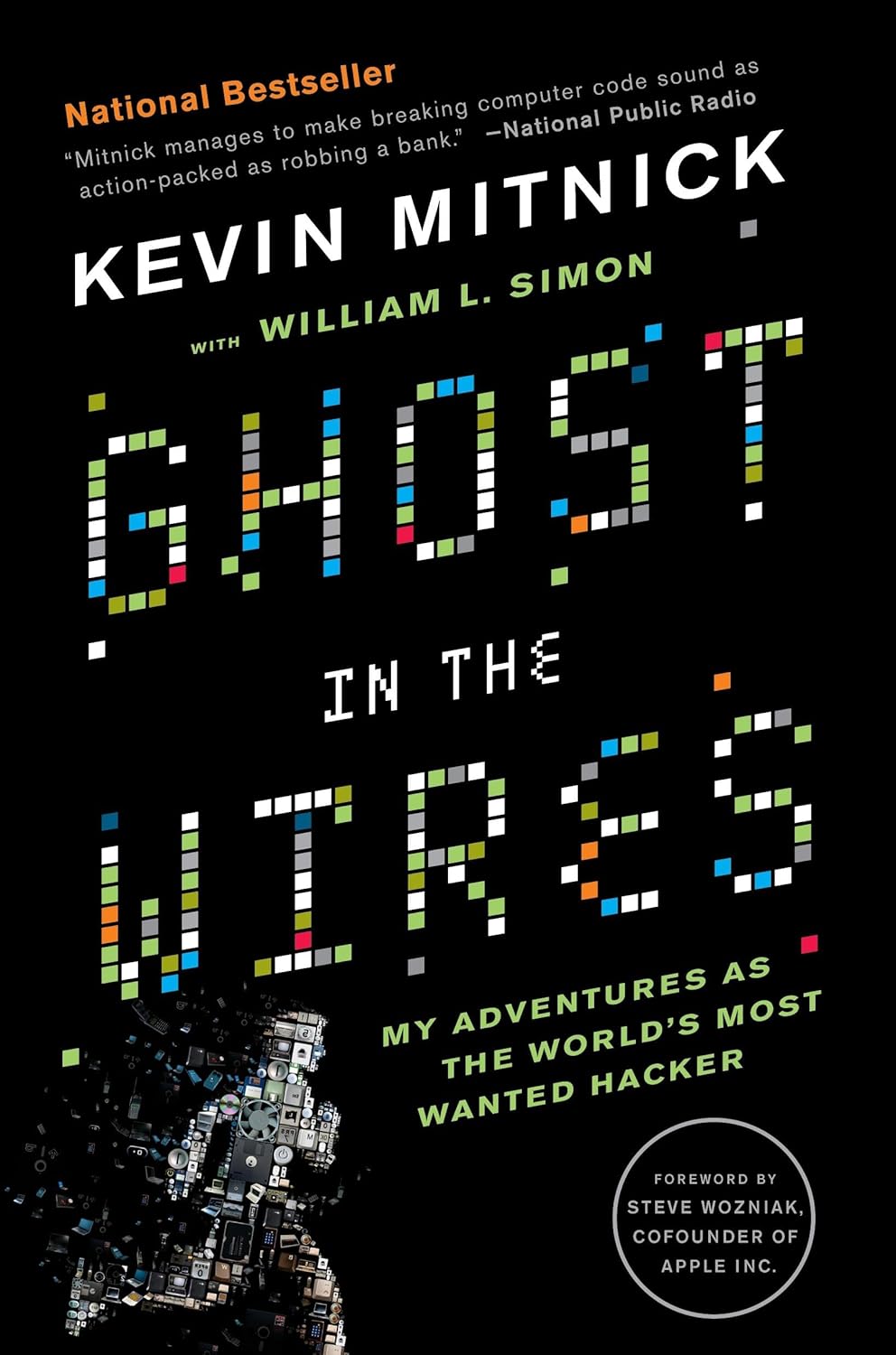
If “Kingpin” is about the business of hacking, this is about the obsession. Kevin Mitnick’s memoir chronicles his years as the FBI’s most wanted cybercriminal, a period when he used social engineering and technical prowess to breach some of the world’s most secure systems. Unlike Max Vision’s calculated criminal enterprise, Mitnick’s story is driven by an almost pathological curiosity—the irresistible urge to see what lies behind digital doors. His techniques were often breathtakingly simple: calling tech support, impersonating employees, and exploiting human trust rather than writing sophisticated exploits. Yet these methods proved devastatingly effective against corporations that invested millions in technical security while neglecting their most vulnerable component: people.
Mitnick’s narrative is unapologetic and refreshingly honest about his motivations. He wasn’t primarily driven by financial gain (though he certainly enjoyed the perks); he hacked for the intellectual challenge and the thrill of outsmarting systems designed to keep him out. His descriptions of manipulating phone company employees to reveal sensitive information, or convincing security guards to grant physical access to restricted areas, read like scenes from a heist movie. The tension builds as the FBI’s pursuit intensifies, culminating in his dramatic capture in North Carolina. Throughout, Mitnick maintains a hacker’s ethos: information wants to be free, and artificial barriers exist to be circumvented.
What elevates “Ghost in the Wires” beyond a simple crime memoir is Mitnick’s post-incarceration perspective. Having served five years in prison (including eight months in solitary confinement), he emerged with a nuanced understanding of both sides of the security equation. His later career as a security consultant and his advocacy for better social engineering defenses demonstrate genuine growth. The book serves as both a cautionary tale about the consequences of unchecked curiosity and a masterclass in human psychology. For anyone interested in cybersecurity, it’s essential reading—not for the technical details, but for the profound insight it offers into why security fails when it ignores the human element.