Fahrenheit 451
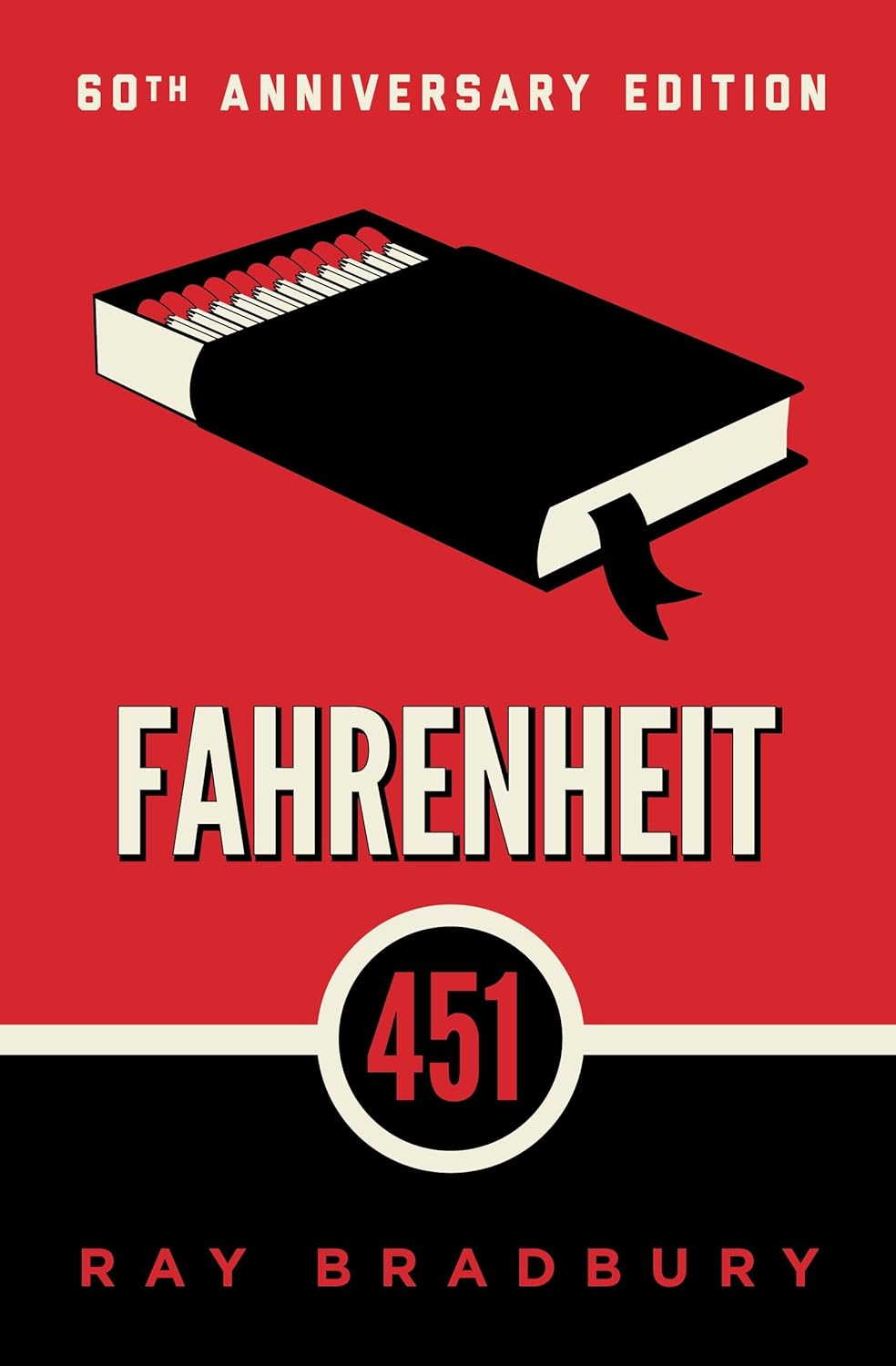
The “other” great censorship novel. Ray Bradbury’s masterpiece deals with the burning of books and the suppression of thought, fitting right next to Winston Smith on your shelf. In this dystopian future, “firemen” don’t put out fires—they start them, burning any books they find to maintain societal happiness and conformity. Protagonist Guy Montag begins as a loyal fireman who takes pleasure in watching pages curl and blacken, but a chance encounter with his free-thinking neighbor Clarisse McClellan plants seeds of doubt. Her simple question—”Are you happy?”—unleashes a crisis of conscience that leads Montag to secretly hoard books, seek out intellectuals, and ultimately rebel against the system he once served.
Bradbury’s prose is poetic and incendiary (pun intended). His descriptions of book burning are both horrifying and mesmerizing, capturing the visceral satisfaction of destruction while mourning the loss of knowledge. The mechanical hound, a robotic tracker with poisoned needles, serves as a chilling symbol of state surveillance and punishment. Captain Beatty, Montag’s superior, is one of literature’s great antagonists—a man who knows literature intimately yet advocates for its destruction, arguing that books create inequality, controversy, and unhappiness. His monologues about why society chose ignorance over knowledge are disturbingly persuasive, forcing readers to confront uncomfortable questions about the trade-offs between comfort and truth.
What makes “Fahrenheit 451” endure is its nuanced understanding of how censorship works. Bradbury doesn’t blame government alone; he shows how censorship emerges from societal preferences for entertainment over engagement, simplicity over complexity, and consensus over controversy. The novel’s famous line—”A book is a loaded gun in the house next door”—captures the fear that drives censorship: not just fear of subversion, but fear of difference. The ending, with Montag joining a community of “living books” who memorize entire texts to preserve them, offers a fragile but powerful vision of resistance. In an age of algorithmic filtering, content moderation, and information overload, Bradbury’s warning about the dangers of voluntary ignorance feels more urgent than ever.