Brave New World
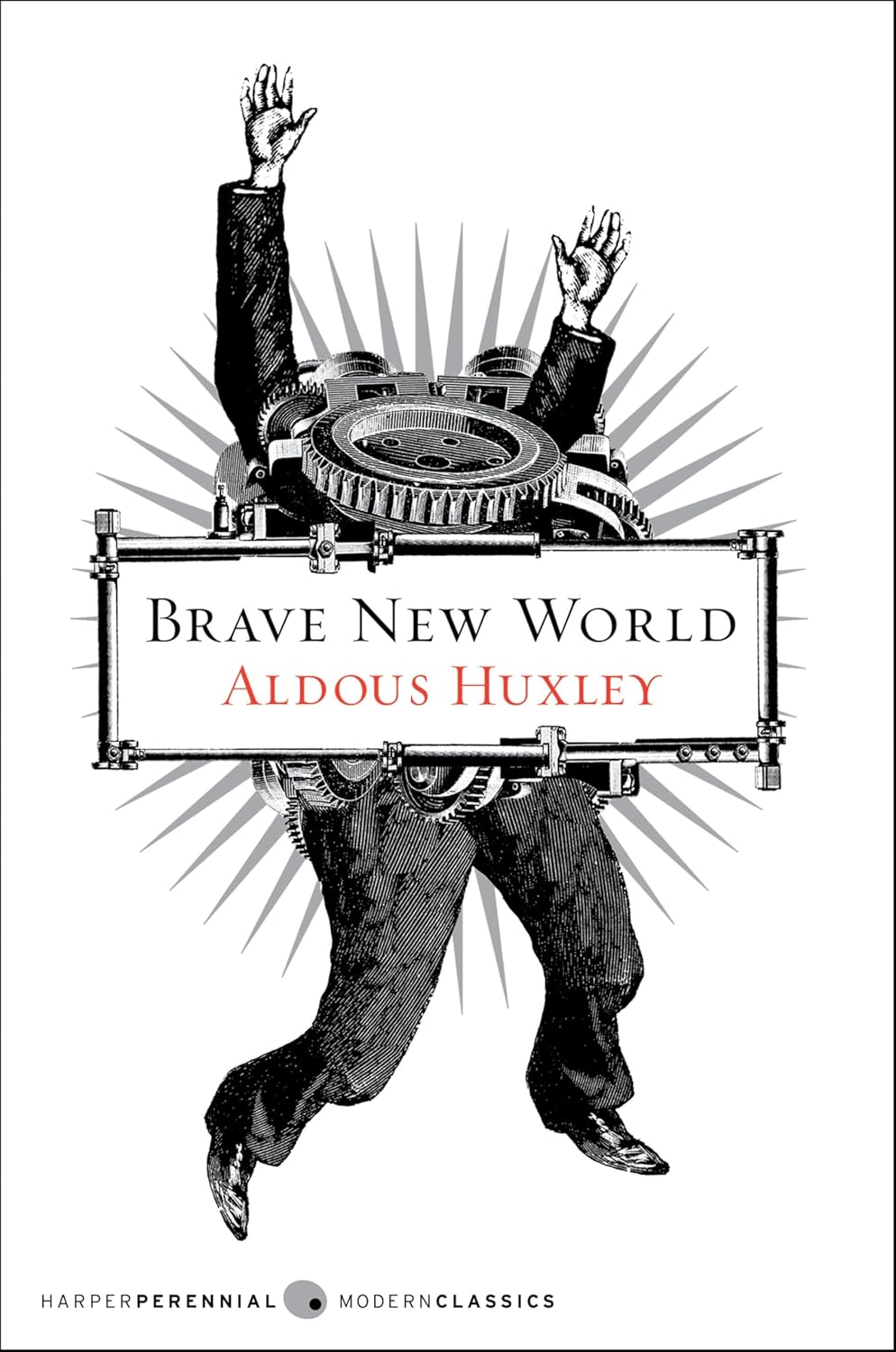
Often paired with 1984, this dystopian masterpiece presents a terrifying vision where humanity has traded freedom for happiness. While Orwell feared we’d be controlled by pain and surveillance, Huxley feared we’d be controlled by pleasure and distraction. In the World State of A.F. 632 (After Ford), citizens are genetically engineered, psychologically conditioned, and kept docile with the drug soma. There’s no need for secret police or torture chambers because people genuinely love their servitude. They’re too busy consuming entertainment, engaging in casual sex, and avoiding any experience that might cause discomfort to notice they’ve lost their souls. It’s a chillingly prescient vision of a society that prioritizes comfort over truth, stability over freedom.
Huxley’s genius lies in making this world feel seductive rather than obviously horrific. The Savage Reservation, where traditional human experiences like family, religion, and suffering still exist, initially seems barbaric by comparison. It’s only through the eyes of John the Savage—raised on the reservation but brought to the World State—that we see the spiritual emptiness beneath the surface prosperity. John’s desperate attempts to find meaning in a world that has eliminated all sources of genuine human struggle form the book’s tragic heart. His famous line, “I want God, I want poetry, I want real danger, I want freedom, I want goodness, I want sin,” articulates the fundamental human yearning for authentic experience that the World State has systematically eradicated.
What makes “Brave New World” feel increasingly relevant is its diagnosis of the mechanisms of modern control. Huxley anticipated our addiction to entertainment, our preference for superficial connections over deep relationships, and our willingness to sacrifice privacy and autonomy for convenience. The book’s critique of consumerism, pharmaceutical dependence, and the infantilization of adults resonates more strongly today than ever. Unlike Orwell’s boot stamping on a human face, Huxley’s dystopia doesn’t need violence because it has perfected the art of making oppression enjoyable. This makes it both more subtle and more insidious—a warning that the greatest threat to human freedom may not be tyranny we resist, but comfort we embrace.