American Kingpin
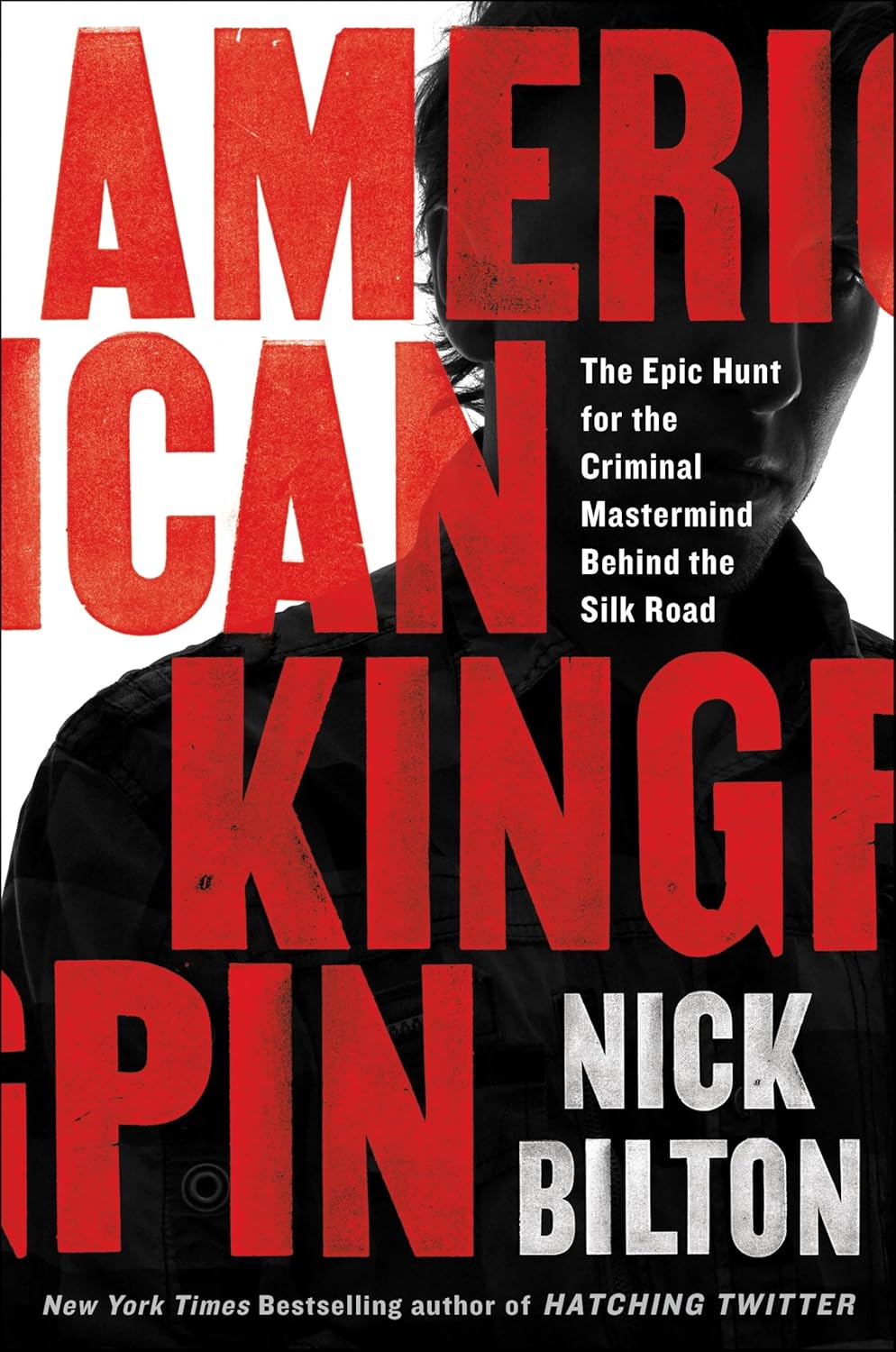
This tells the story of Ross Ulbricht and the Silk Road. It perfectly bridges the gap between “The Godfather” and “Kingpin”—it’s about a modern-day drug lord running a billion-dollar empire from a laptop in a San Francisco library. Nick Bilton’s investigative prowess shines as he reconstructs Ulbricht’s transformation from idealistic libertarian to ruthless digital kingpin. The narrative toggles between Ulbricht’s encrypted communications with hitmen (whom he believed would eliminate threats to his operation) and the dogged investigation by IRS agent Gary Alford, who pieced together Ulbricht’s identity through a forgotten forum post linking “altoid” to Silk Road’s early days.
Bilton masterfully captures the contradictions at the heart of Ulbricht’s project. On one hand, Silk Road represented a radical vision of free markets unshackled from government control—a digital frontier where individuals could transact without interference. On the other, Ulbricht’s descent into ordering murders (albeit unsuccessfully) revealed the corrupting influence of absolute power, even in a supposedly decentralized system. The book’s pacing is cinematic, building tension as Ulbricht’s paranoia grows and law enforcement closes in. The climactic scene—Ulbricht’s arrest while logged into the Silk Road admin panel at a public library—feels almost too perfect to be true, yet Bilton’s meticulous sourcing leaves no doubt about its authenticity.
What makes “American Kingpin” particularly compelling is its exploration of the broader implications of Ulbricht’s experiment. Silk Road wasn’t just a marketplace for illegal drugs; it was a proof-of-concept for how technology could disrupt traditional criminal hierarchies. By eliminating the need for violent turf wars and physical distribution networks, Ulbricht created a more efficient, less bloody form of organized crime. Yet this efficiency came at a moral cost, as Ulbricht rationalized facilitating addiction and violence as simply providing a platform for voluntary transactions. Bilton doesn’t shy away from these ethical complexities, allowing readers to grapple with the uncomfortable questions Ulbricht’s story raises about freedom, responsibility, and the unintended consequences of technological innovation.